
Therapy between sessions: how support workers can help with allied health programs
A practical guide for GPs and allied health professionals on sharing a home program with a participant's support team, and keeping roles clear.
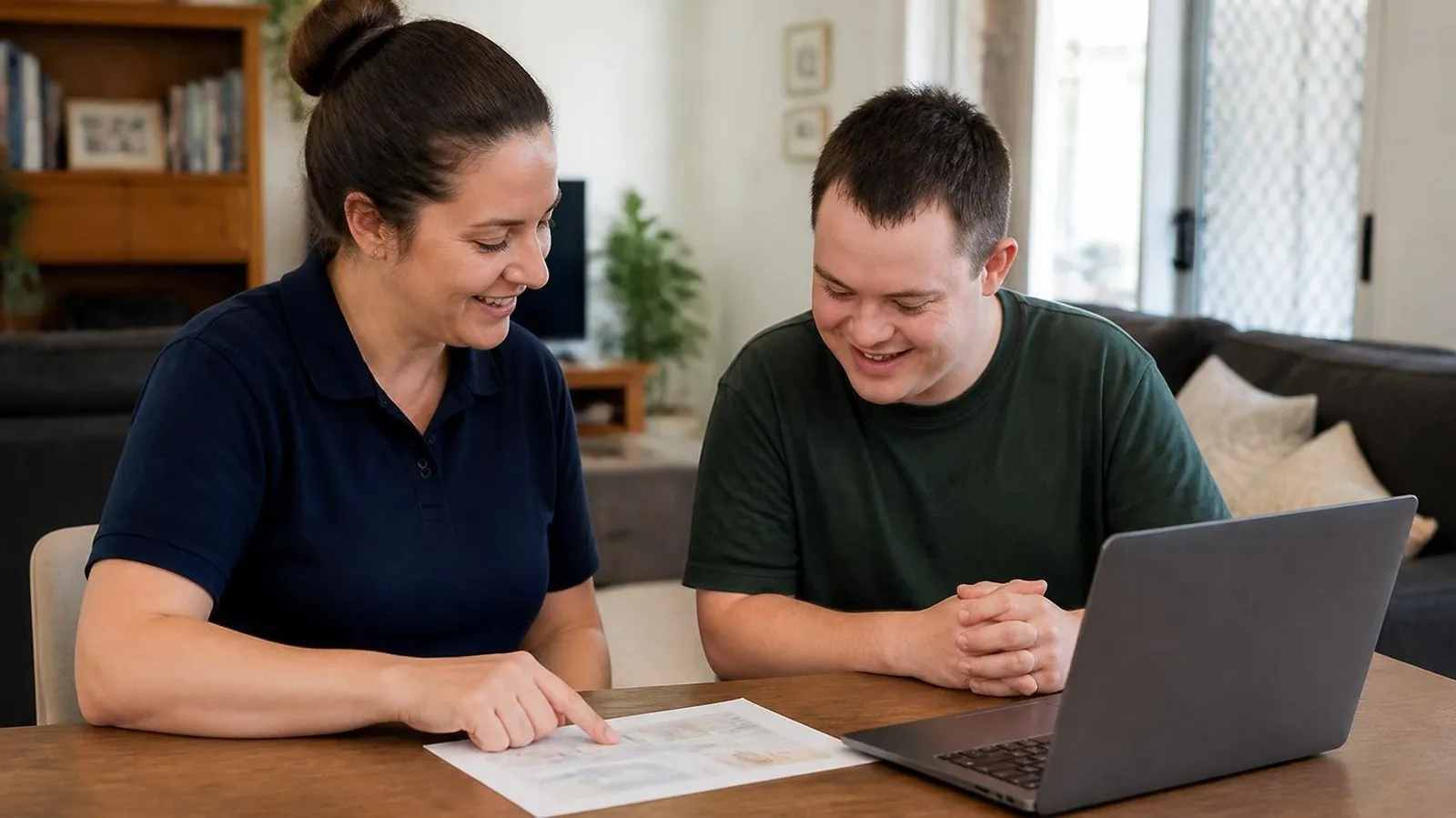
Therapy sessions might happen once a week, once a fortnight or less. Much of what a person is working towards happens in everyday life: in the kitchen, getting dressed, catching the bus. For GPs and allied health professionals working with NDIS participants, support workers can help keep a therapy program going between sessions, as long as everyone is clear about their role.
What the NDIS says about therapy supports
The NDIS describes therapy supports as helping people improve their skills and independence with everyday activities, such as communication, personal care, mobility and community living.
Only qualified and registered allied health professionals can deliver therapy supports.
Therapists may recommend things for the participant to practise at home, and the NDIS says some family members, carers and support workers may need training.
Therapy assistants work under an allied health professional. Level 1 assistants work under direct supervision, and level 2 assistants can work under delegation.
The NDIA may ask a therapist for a progress report if a plan needs to be reassessed.
In short, the therapist designs, delivers and reviews the therapy. A support worker can help the person practise what the therapist has recommended, as part of their usual daily support.
What support workers can do
Follow a written home program during everyday routines, such as a cooking sequence set by an occupational therapist.
Use agreed strategies the same way each time, such as a communication aid, visual schedule or positioning plan.
Record what was practised and how it went, in the format the therapist asks for.
Notice changes and pass them on promptly.
Follow the person's own choices and pace.
What support workers should not do
Change exercises, equipment settings or techniques without the therapist's guidance.
Deliver therapy or make clinical decisions.
Practise anything they have not been shown how to do safely.
Making the handover work
Share one clear, written program in plain language. Photos or short videos can help, with the participant's consent.
Offer a short training session for regular workers, in person or by video call.
Say what you would like recorded, and how often you want an update.
List the signs that mean a worker should stop and contact you or the person's treating team.
Agree on one main contact, so updates don't get lost between visits.
Check the participant's plan and service agreement, so everyone knows which supports are funded and how.
How Beatified Care works with treating teams
A Registered Nurse oversees every care plan. When a participant's therapist shares a home program, with the participant's consent, we build it into their support plan, show regular workers how to follow it, and keep notes the therapist can use. Our workers support the program but don't change it. Questions about a person's therapy or health always go back to their treating team.
We support self-managed and plan-managed participants across Greater Brisbane.
Talk to us
To talk about a participant you work with, call 0469 888 040 or refer online at www.beatifiedcare.com.au/refer.