
PEG feeding at home: what good support looks like
What families can expect from a well-trained support team, and questions to ask any provider.
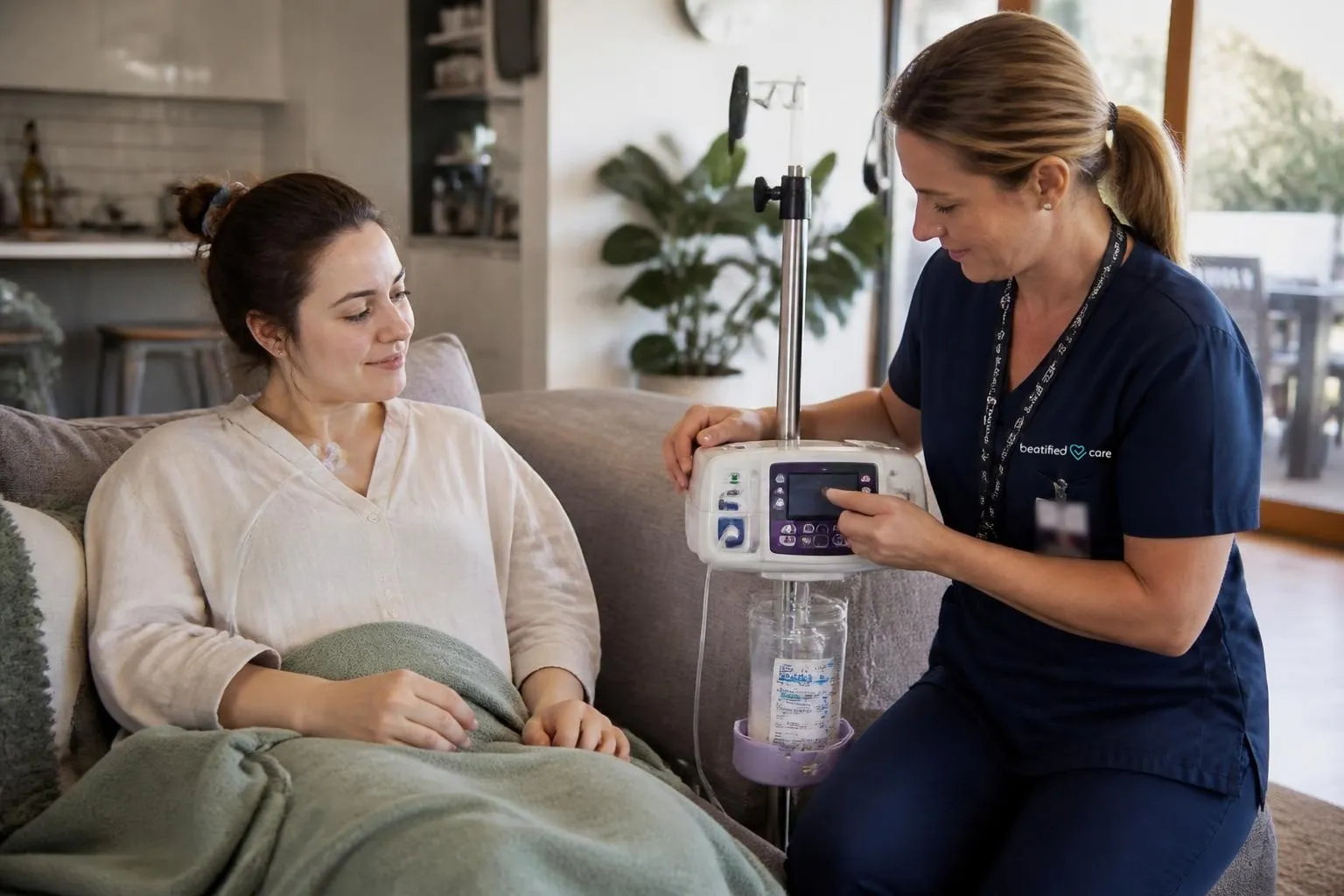
A PEG (percutaneous endoscopic gastrostomy) tube lets a person receive nutrition, fluids and sometimes medication directly into the stomach. With the right support, many people manage PEG feeding safely at home.
This article is general information. Always follow the plan from your dietitian, nurse or doctor.
What good support looks like
Workers are trained and checked on the person's specific feeding plan before they support them.
The feeding plan, pump settings and flushing routine are written down and easy to follow.
Hygiene is consistent: hand washing, clean equipment and correct storage of feeds.
Stoma care is part of the daily routine, and any changes are noted.
The person's comfort, positioning and dignity come first.
When to get help
Your health team will tell you what to watch for. Common reasons to contact them include a tube that has moved or come out, redness, swelling or discharge around the stoma, vomiting, or signs of infection such as fever. In an emergency, call 000.
Questions to ask a provider
How are workers trained in PEG care, and who checks their competency?
Who oversees the support plan?
How do you communicate with our dietitian and health team?
What happens if a regular worker is unavailable?
Our support for PEG feeding is overseen by a Registered Nurse. Call 0469 888 040 to talk it through.